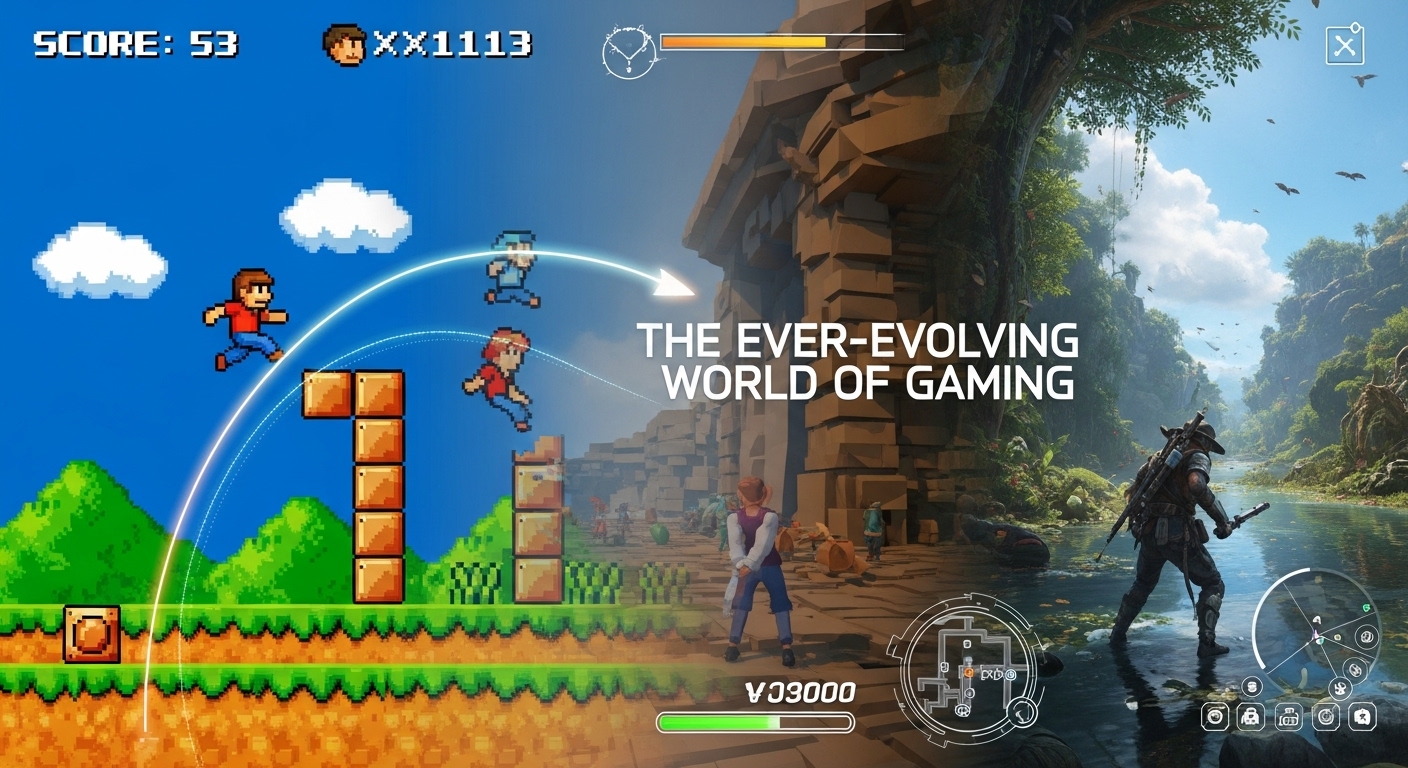
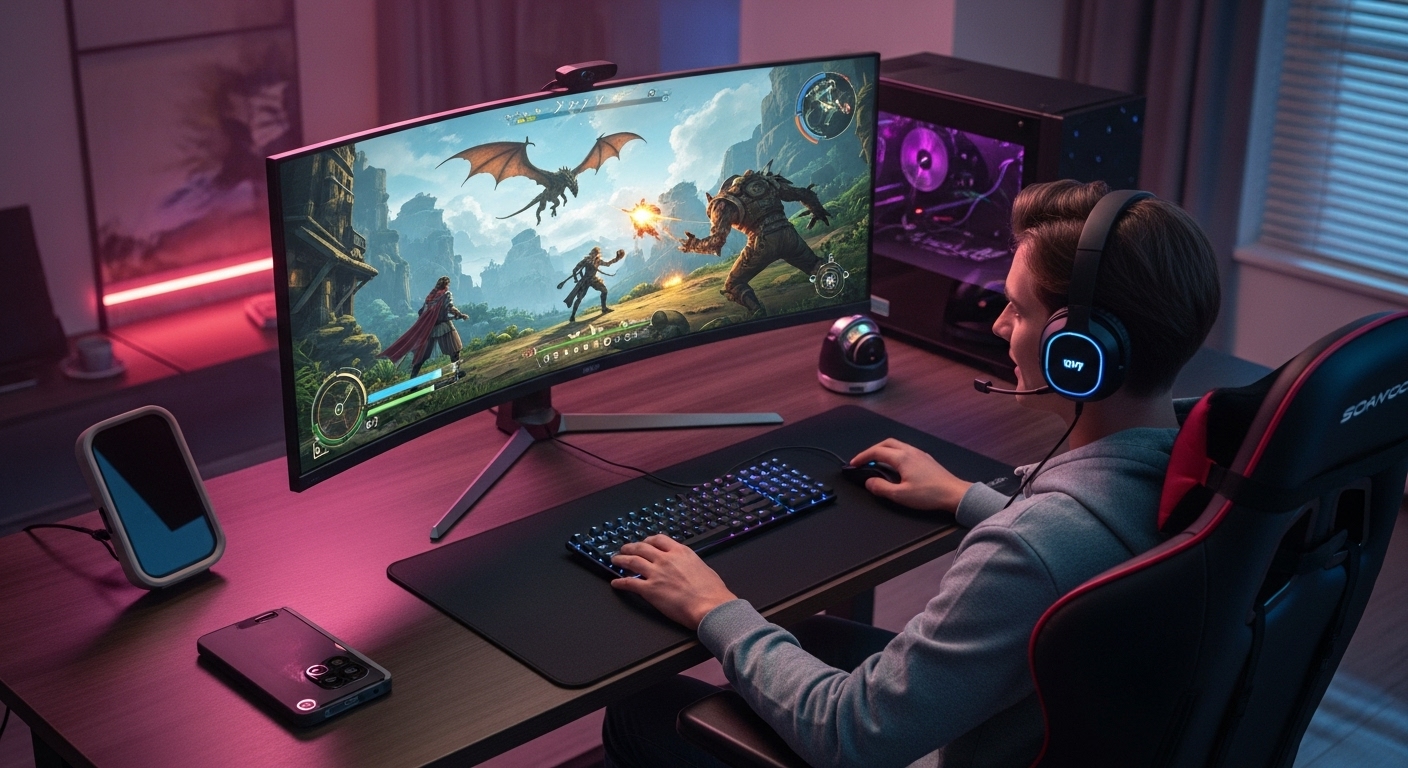
Gaming has evolved significantly over the decades, transforming from simple pixelated screens into immersive, hyper-realistic virtual worlds. What started as a niche hobby has now grown into a multi-billion-dollar industry that captivates millions across the globe. This post takes a deep dive into the evolution of gaming, its impact on society, and where it might be headed in the future.
The Birth of Video Games
The history of video games dates back to the early 1950s, with rudimentary games like Tennis for Two and Spacewar! appearing on experimental computers. These first games were limited by technology, but they laid the foundation for what would become a worldwide phenomenon. In 1972, Atari introduced Pong, a simple table-tennis game that marked the start of the commercial video game era. Pong was revolutionary at the time, as it brought video games to the public’s attention and sparked the first wave of arcade gaming.
Arcades quickly became the epicenter of the gaming world in the late 1970s and early 1980s. Games like Pac-Man, Donkey Kong, and Space Invaders captured the imagination of people worldwide, with arcade cabinets becoming a common sight in malls, restaurants, and other public spaces. This period is often regarded as the “Golden Age” of arcade games, where a sense of community was built around these spaces.
The Rise of Home Consoles
The true breakthrough for gaming came in the 1980s with the rise of home consoles. No longer did gamers have to leave their homes to enjoy video games. The release of the Nintendo Entertainment System (NES) in 1985 is often credited with revitalizing the gaming industry after the video game crash of 1983. The NES brought classic titles like Super Mario Bros., The Legend of Zelda, and Metroid, which quickly became household names.
Following Nintendo’s success, Sega entered the market with its Genesis console, introducing games like Sonic the Hedgehog, which became a worthy rival to Mario. The competition between Sega and Nintendo fueled innovation, pushing both companies to develop new technologies and better game titles. The 16-bit and 32-bit consoles of the early 1990s were the golden years of 2D platformers, side-scrollers, and beat-’em-ups, offering new and exciting experiences to gamers everywhere.
In the late 1990s, Sony’s PlayStation console disrupted the industry once again, ushering in the era of 3D gaming. Final Fantasy VII, Gran Turismo, and Metal Gear Solid demonstrated the potential of the PlayStation as more than just a gaming system—it was a cultural force. The success of the PlayStation also introduced the world to CD-based games, allowing for larger, more detailed games with fully orchestrated soundtracks, opening up new storytelling possibilities.
The Rise of PC Gaming
While consoles were making their mark on the mainstream, another form of gaming was flourishing—PC gaming. Computers provided the ability for more complex graphics, faster processing power, and games that could be continually updated or modified. PC gaming took off in the 1990s, with titles like Doom, Warcraft, and StarCraft offering experiences that were both graphically advanced and deeply engaging.
The 1990s also saw the rise of the internet, which would forever change the way we interact with games. Multiplayer online games like Quake and Diablo allowed players to connect with others across the globe, laying the groundwork for what would eventually become a multi-billion-dollar esports industry. Over time, online games evolved from simple player-vs-player experiences to fully immersive virtual worlds, with World of Warcraft leading the charge in the early 2000s.
The Game-Changer: Online Multiplayer and MMOs
Massively Multiplayer Online (MMO) games like World of Warcraft, EVE Online, and Guild Wars revolutionized the concept of multiplayer gaming. Players no longer had to rely on local connections or split-screen modes. Instead, they could explore vast virtual worlds with thousands of others. These games created sprawling digital landscapes where players could build relationships, complete quests, and even compete in large-scale PvP (player-versus-player) battles.
The social aspect of online gaming became a huge draw. Gaming communities began to form, not just around games, but also around streaming platforms like Twitch and YouTube. As broadband internet became more widespread, online gaming reached new heights, becoming more accessible to millions.
At the same time, competitive gaming and esports were beginning to take off. Professional gaming leagues, tournaments, and live streams allowed gamers to not only enjoy games but also to make careers out of their passion. Today, esports is a multi-billion-dollar industry with millions of fans, and games like League of Legends, Dota 2, and Counter-Strike: Global Offensive have become global cultural events.
The Mobile Gaming Revolution
While console and PC gaming dominated the 2000s, mobile gaming began to gain ground in the late 2000s. The launch of the iPhone in 2007 marked a pivotal moment in the gaming industry. With the introduction of the App Store, gaming became even more accessible, reaching a vast new audience. Casual games like Angry Birds, Candy Crush, and Clash of Clans made gaming a part of everyday life for millions who had never considered themselves “gamers” before.
Mobile gaming’s widespread popularity introduced a new generation to the world of video games. Unlike traditional consoles or PCs, mobile gaming was portable, quick, and often free-to-play. The monetization model shifted as well, with in-app purchases and microtransactions becoming a standard business practice for many mobile games.
As mobile devices grew more powerful, so too did the complexity of the games available. Today, mobile games boast impressive graphics and complex gameplay mechanics, rivaling some console titles. The accessibility of mobile gaming also sparked a shift in the types of games being developed, with a focus on hyper-casual games, as well as multiplayer experiences on the go.
Virtual Reality and Augmented Reality: The Next Frontier
The next step in gaming evolution is already unfolding with the advent of virtual reality (VR) and augmented reality (AR). VR gaming immerses players in a fully 3D world where they can interact with their surroundings and experience gameplay from a first-person perspective. Popular VR systems like the Oculus Rift, PlayStation VR, and HTC Vive have brought a new dimension to gaming, offering experiences that were once considered science fiction.
Meanwhile, AR gaming has taken the world by storm with games like Pokémon GO, which encourages players to explore the real world while interacting with digital elements. AR games use the player’s real-world environment as the backdrop for gameplay, merging the physical and digital worlds in ways previously unimaginable.
As VR and AR technologies advance, the boundaries between the physical and virtual worlds are becoming increasingly blurred. This will likely open up new possibilities for gaming experiences—whether it’s fully immersive worlds, virtual social interactions, or even hybrid games that combine the real world with digital elements in creative ways.
The Future of Gaming: Artificial Intelligence and Beyond
Looking ahead, the future of gaming is full of possibilities, with several emerging technologies likely to shape the industry. Artificial intelligence (AI) is already playing a major role in game development. AI algorithms are being used to create more complex NPC (non-player character) behaviors, making virtual worlds feel more dynamic and responsive. Some developers are experimenting with procedurally generated worlds, where the game world is created algorithmically, offering limitless possibilities and replayability.
Furthermore, advances in cloud gaming, which allows players to stream games rather than download them, are making games more accessible. Platforms like Google Stadia, Xbox Cloud Gaming, and PlayStation Now are paving the way for a future where players don’t need high-end consoles or powerful PCs to enjoy high-quality games.
Finally, the development of neural interfaces and brain-computer technologies could lead to games that are controlled directly by thought. Imagine playing a game without the need for a controller or keyboard—simply by thinking about your next move. While this technology is still in its infancy, it has the potential to revolutionize the gaming experience in ways we can only begin to imagine.
Conclusion: The Ongoing Evolution of Gaming
Gaming has come a long way from its humble beginnings. From pixelated arcade games to ultra-realistic virtual worlds, gaming has continually pushed the boundaries of technology, creativity, and community. With advancements in AI, VR, AR, and cloud gaming, the next chapter in the gaming industry promises to be even more thrilling and transformative. What’s clear is that gaming is no longer just a pastime; it’s a cultural force that continues to shape the way we live, connect, and experience the world. The future of gaming is limitless, and as technology continues to evolve, so too will the ways in which we engage with games.