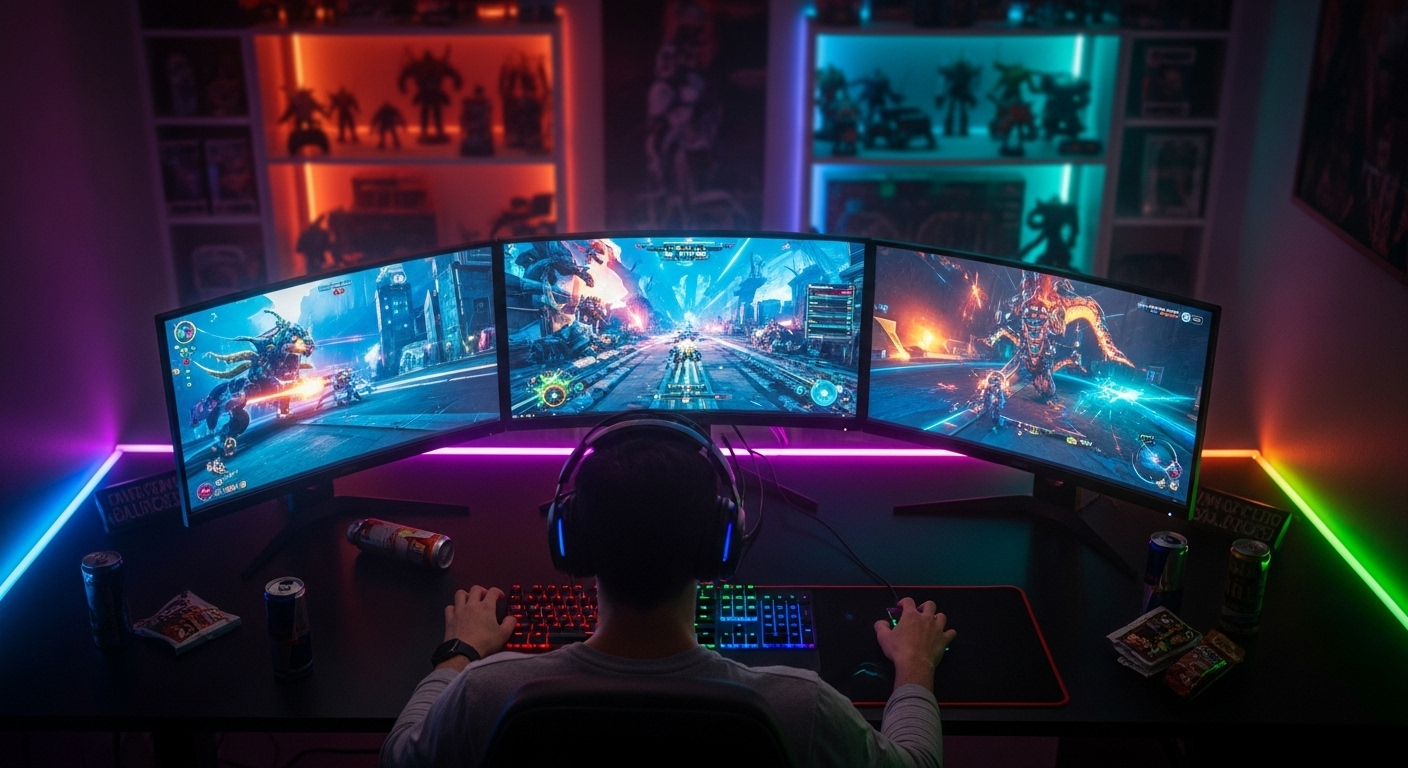
Gaming has come a long way from its humble beginnings, evolving from simple pixelated adventures to vast, immersive worlds filled with stunning graphics, intricate storylines, and multiplayer experiences that connect players across the globe. As technology continues to advance, the future of gaming is poised to offer experiences that are more engaging and immersive than ever before. In this blog post, we’ll take a deep dive into the history of gaming, explore its present state, and look ahead at what the future holds for gamers worldwide.
The Humble Beginnings: Arcade Games and the Birth of Video Gaming
The story of modern gaming begins in the 1970s with the advent of arcade machines. Early games like Pong, Space Invaders, and Pac-Man were revolutionary for their time, offering players an entirely new form of entertainment. These simple, 2D games, though primitive by today’s standards, captured the imagination of millions and laid the foundation for what would later become a multi-billion dollar industry.
Arcade games were designed to be easily accessible, with simple controls that anyone could pick up and play. They were often set up in public spaces like malls, bowling alleys, and restaurants, offering a sense of social interaction and competition that was rare in the entertainment world at the time.
The 1980s and early 1990s marked the rise of home consoles like the Nintendo Entertainment System (NES) and the Sega Genesis, which brought the gaming experience into living rooms. Games like Super Mario Bros., The Legend of Zelda, and Sonic the Hedgehog introduced players to vast, colorful worlds and exciting new gameplay mechanics that would go on to influence the gaming landscape for decades.
The Golden Age of Console Gaming
The 1990s and early 2000s marked the golden age of console gaming. With the release of consoles like the Sony PlayStation, Nintendo 64, and Microsoft Xbox, gaming was no longer a niche hobby but a mainstream form of entertainment enjoyed by people of all ages.
During this era, many beloved franchises were born, including Final Fantasy, Metal Gear Solid, and Halo. These games introduced players to complex narratives, immersive worlds, and innovative gameplay that pushed the limits of what was possible on home consoles.
One of the most significant advancements in gaming technology during this time was the shift from 2D to 3D graphics. Games like Super Mario 64 and The Legend of Zelda: Ocarina of Time utilized 3D environments to create dynamic, explorable worlds that allowed players to experience games in an entirely new way. This technological leap paved the way for even more detailed and realistic games in the years to come.
The Rise of Online Gaming
As the internet became more widely accessible in the late 1990s and early 2000s, online gaming began to take off. Early pioneers like Quake and Unreal Tournament offered players the ability to compete against one another in real-time over the internet, creating a new social dynamic in the gaming world.
The launch of World of Warcraft in 2004 was a game-changer, offering players the chance to immerse themselves in a persistent online world filled with other players from around the globe. MMORPGs (Massively Multiplayer Online Role-Playing Games) became a dominant force in the gaming industry, offering an unparalleled level of social interaction, collaboration, and competition.
At the same time, consoles began to incorporate online functionality, allowing players to connect with friends and strangers for multiplayer matches. The launch of Xbox Live and PlayStation Network in the mid-2000s marked the beginning of the online gaming revolution for consoles. Games like Halo 2, Call of Duty, and Gears of War showcased the potential of online multiplayer gaming on home consoles, giving rise to competitive gaming communities and the rise of eSports.
The Rise of Mobile Gaming
As smartphones became more powerful and widely adopted, mobile gaming quickly emerged as a major force in the industry. With the release of the Apple App Store and Google Play, players could download games instantly and play them on the go. Mobile games like Angry Birds, Candy Crush Saga, and Pokémon GO became household names, attracting millions of casual gamers who may not have otherwise been interested in traditional gaming.
The accessibility of mobile games made gaming more inclusive, allowing players of all ages and backgrounds to engage in gaming without the need for expensive consoles or PCs. In many ways, mobile gaming democratized the medium, introducing a whole new audience to gaming that wouldn’t have been reached by traditional gaming platforms.
Gaming in the Modern Era: Stunning Graphics and Immersive Worlds
Today, gaming has reached new heights in terms of both technology and storytelling. With the release of high-powered consoles like the PlayStation 5 and Xbox Series X, gamers can now experience cutting-edge graphics and highly detailed worlds that feel more lifelike than ever before. The advancements in graphics processing units (GPUs) and the power of modern gaming consoles allow developers to create realistic environments, detailed character models, and smooth animations that were once thought to be impossible.
Games like The Last of Us Part II, Red Dead Redemption 2, and Cyberpunk 2077 offer players highly immersive worlds with photorealistic visuals, intricate storylines, and deep character development. These games push the boundaries of what is possible in terms of narrative and visual fidelity, providing players with experiences that are truly cinematic in scope.
Furthermore, the rise of virtual reality (VR) and augmented reality (AR) technology is set to revolutionize the way we experience games. Devices like the Oculus Quest and PlayStation VR offer players the chance to step into fully immersive worlds, where they can interact with their surroundings in ways that were previously impossible. VR games like Half-Life: Alyx and Beat Saber showcase the potential of this technology, providing players with a level of immersion that traditional gaming experiences can’t match.
The Future of Gaming: Cloud Gaming and AI Integration
Looking ahead, the future of gaming is incredibly exciting, with new technologies on the horizon that promise to change the way we play and experience games. One of the most promising developments is cloud gaming, which allows players to stream games directly from remote servers rather than relying on powerful hardware. Services like Google Stadia, Xbox Cloud Gaming, and NVIDIA GeForce Now are already offering players the ability to play high-quality games on devices like smartphones, laptops, and tablets without the need for expensive consoles or gaming PCs.
Cloud gaming has the potential to make gaming more accessible to people around the world, regardless of their hardware limitations. It could also pave the way for new business models, where players pay for access to a library of games rather than purchasing individual titles.
Another exciting development is the integration of artificial intelligence (AI) into games. AI-driven characters and storylines can adapt to players’ actions, creating a more dynamic and personalized experience. Games like The Elder Scrolls V: Skyrim and Hitman already feature AI systems that react to player choices, but in the future, we could see AI take on even more significant roles in shaping the narrative and gameplay experience.
Additionally, advancements in machine learning could allow for more realistic character behaviors, more intelligent enemies, and even games that can evolve based on player input over time. This level of interactivity could revolutionize single-player gaming, creating experiences that feel uniquely tailored to each player.
Conclusion: Gaming’s Bright Future
The evolution of gaming from its simple arcade origins to the immersive, highly detailed experiences of today has been nothing short of remarkable. With each technological advancement, gaming continues to push the boundaries of what is possible, creating new opportunities for storytelling, social interaction, and innovation.
As we look to the future, it’s clear that gaming will only continue to grow in scope and complexity. With technologies like cloud gaming, VR, and AI on the horizon, the way we play games will be fundamentally transformed in the coming years. Whether you’re a casual player or a dedicated enthusiast, one thing is certain: the best days of gaming are yet to come.
Gaming is no longer just a hobby; it has become a cultural phenomenon that connects people, tells stories, and offers experiences that are as rich and varied as any other form of entertainment. And with each new technological leap, the gaming world becomes an even more exciting place to be.