The world of gaming has evolved in leaps and bounds over the years. From the humble beginnings of pixelated graphics and 8-bit sounds, gaming has grown into a multi-billion-dollar industry that has captivated millions of people globally. Whether it’s the immersive open-world experiences, the competitive thrill of esports, or the social connections built in multiplayer games, gaming has truly redefined how we entertain ourselves. But beyond the flashy visuals and cutting-edge technology, what makes gaming such an essential part of modern culture?
The Evolution of Gaming
Gaming began as a simple form of entertainment, with titles like Pong and Space Invaders leading the way in the late 1970s and early 1980s. These games were basic, yet innovative, and laid the groundwork for the gaming industry we know today. With the advent of home consoles like the Atari 2600 and later the Nintendo Entertainment System (NES), gaming made its way into living rooms across the world.
Fast forward to today, and we now have ultra-realistic graphics, complex storylines, and interactive multiplayer environments that allow players to connect across continents. The continuous growth of technology has pushed game developers to experiment with virtual reality (VR), augmented reality (AR), and cloud gaming, bringing us experiences that were once confined to the realm of science fiction.
Immersion and Storytelling: The Heart of Modern Gaming
What truly separates today’s games from those of the past is the level of immersion they provide. Gone are the days when players simply shot their way through levels or solved puzzles in isolated environments. Today, games like The Witcher 3, Red Dead Redemption 2, and The Last of Us offer rich, emotionally-charged stories that make players feel as though they’re part of the narrative.
These games feature well-developed characters, intricate plots, and beautifully designed worlds that come to life with every turn. Players find themselves forming emotional bonds with the characters they control, and often, the line between player and character blurs. The sense of agency and choice in these games means players can dictate the outcome of the story, making each playthrough unique.
Social Gaming: Building Communities Around the World
Gaming has always been a social activity, but in recent years, it has transformed into a global phenomenon where people connect in ways they never could before. Multiplayer games such as Fortnite, League of Legends, and Minecraft have created communities of like-minded individuals who can interact, collaborate, and compete with one another from all corners of the globe.
The rise of live streaming platforms like Twitch and YouTube Gaming has further amplified this sense of community. Gamers now have the ability to share their experiences with millions of people, participate in live chats, and even make a career out of their passion. These platforms have turned gaming into not just a pastime, but also a professional pursuit for many content creators.
The Competitive Edge: Esports and the Rise of Professional Gaming
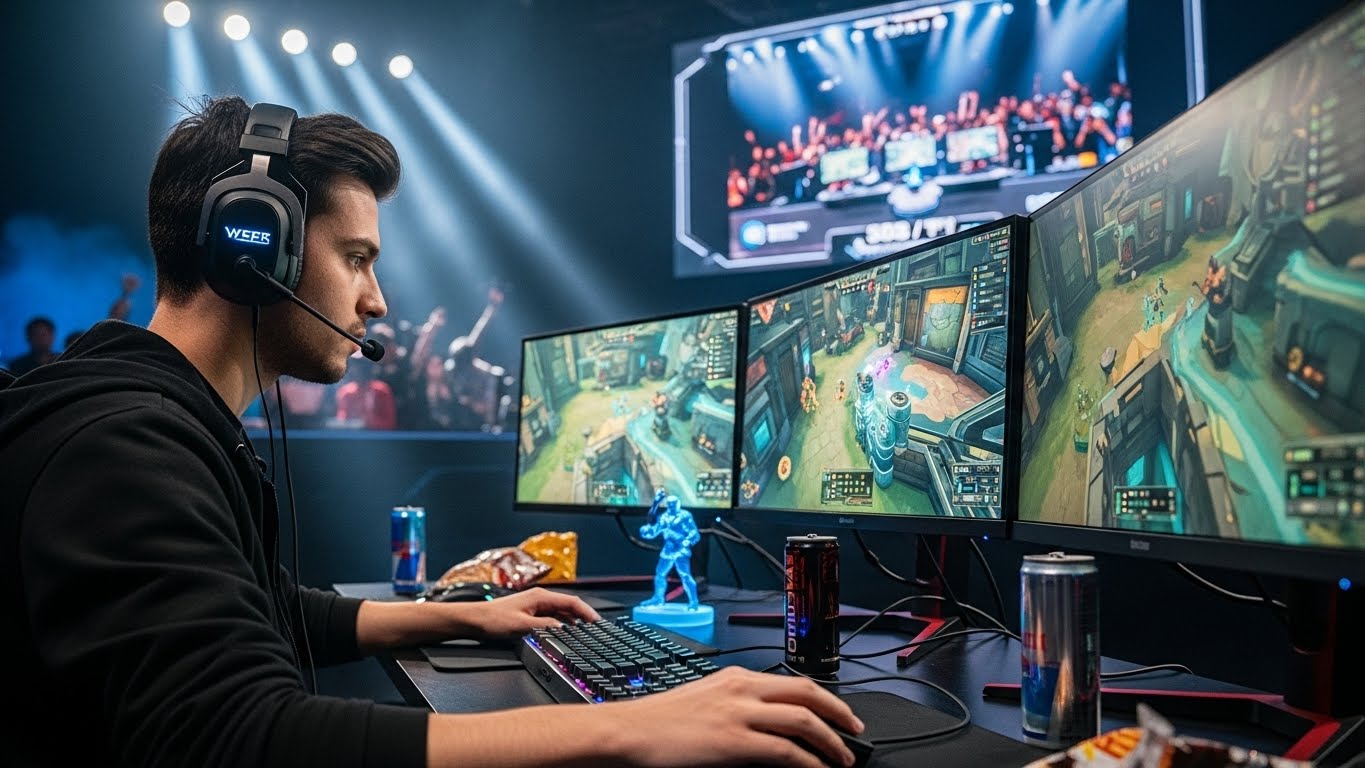
While gaming used to be seen as a leisurely activity, it has now become a highly competitive sport. Esports, or electronic sports, involves organized multiplayer video game competitions, particularly between professional players, individually or as teams. Games like Counter-Strike: Global Offensive, Dota 2, and Overwatch have paved the way for esports to become a mainstream phenomenon.
Tournaments with prize pools worth millions of dollars attract viewers and fans, similar to traditional sports like football or basketball. The professionalism of esports has created opportunities for players to make substantial careers in the field, and the rise of esports teams, coaches, analysts, and broadcasters has transformed gaming into a legitimate industry with career paths for many.
Gaming as an Escape and a Tool for Self-Expression
One of the most unique aspects of gaming is its ability to act as a form of escapism. Whether it’s exploring new worlds, completing difficult quests, or simply relaxing with friends in a cooperative environment, video games provide an outlet for stress relief and a way to temporarily disconnect from the challenges of everyday life.
Moreover, gaming serves as a creative outlet for self-expression. Players can customize characters, design worlds, and even create their own games through modding communities or game development software. This creativity has fostered a generation of game designers, artists, and musicians who use gaming as a canvas to showcase their skills.
The Future of Gaming: What Lies Ahead?
The future of gaming is a topic of great speculation and excitement. Virtual reality (VR) and augmented reality (AR) are likely to play a larger role, with more immersive experiences blurring the lines between the virtual and real worlds. Artificial intelligence (AI) could create more adaptive and responsive NPCs (non-playable characters), leading to deeper and more dynamic storytelling. Furthermore, advancements in cloud gaming may eliminate the need for expensive hardware, making high-quality gaming accessible to even more players.
As gaming technology continues to improve, the possibilities are endless. What is certain, however, is that gaming will continue to grow, bringing people together, inspiring creativity, and offering a much-needed escape from the complexities of the real world.
Conclusion: More Than Just a Game
Gaming has come a long way from its early days, but one thing remains constant: its ability to bring people together, foster creativity, and provide a sense of community. Whether you’re exploring fantastical realms, competing in a high-stakes tournament, or simply chatting with friends, gaming offers something for everyone.
In the end, gaming is not just about playing—it’s about experiencing something greater than yourself, whether that means embarking on an unforgettable adventure or forging lasting friendships. As we look to the future, the only limit to where gaming can go is our imagination. And if history is any indication, the best is yet to come.