Introduction: Gaming as a Modern Cultural Force
In the last few decades, gaming has evolved from a niche hobby into a global cultural force, shaping everything from social interactions to entertainment. Today, the gaming industry stands as one of the most lucrative and influential sectors, with a global audience reaching into the billions. Whether it’s a casual mobile game, a console blockbuster, or a competitive esports tournament, gaming has become an integral part of the digital age, transcending traditional entertainment boundaries.
What was once considered an activity reserved for teenagers or tech enthusiasts is now enjoyed by people of all ages and backgrounds. As gaming continues to grow in popularity, it increasingly defines how we socialize, communicate, and even work. In this blog post, we will explore the history of gaming, the technological advancements that have shaped the industry, and the social and cultural impact of gaming on the modern world. Most importantly, we will look at how gaming is no longer just about playing—it’s about experiencing, interacting, and building communities.
The Genesis of Gaming: From Arcades to Home Consoles
The world of gaming has a rich history that dates back to the mid-20th century. Early video games like Pong (1972) and Space Invaders (1978) sparked the gaming revolution. These early titles were simple, yet their impact was profound. Arcade gaming became a global sensation during the 1970s and 1980s, with machines placed in every corner of the world, from arcades to bars to shopping malls. However, it wasn’t just the technology of the games that captured people’s attention—it was the sense of fun and competition they offered.
As the 1980s progressed, the rise of home gaming consoles brought the arcade experience into people’s living rooms. The release of systems like the Atari 2600 and the Nintendo Entertainment System (NES) helped video games transition from a public activity to a private one. The 1980s and 1990s also saw the creation of some of the most iconic franchises in gaming history, such as Super Mario Bros., The Legend of Zelda, and Sonic the Hedgehog. These games not only revolutionized gameplay but also introduced memorable characters that would become cultural icons.
With the release of more powerful consoles and computer hardware in the 1990s, gaming took a significant leap forward, moving from the world of simple 2D platformers and puzzles to more complex 3D environments. Games like Super Mario 64 and The Legend of Zelda: Ocarina of Time pushed the boundaries of what was possible in terms of graphical fidelity and gameplay complexity. This era marked the birth of the modern gaming industry as we know it today.
The Rise of Online Gaming: Connecting Players Across the Globe
As the internet became more widespread in the late 1990s and early 2000s, gaming entered a new era with the introduction of online multiplayer experiences. Online gaming offered a new way for players to connect and compete, breaking down geographical barriers and allowing people to play with or against one another no matter where they were.
One of the early successes in online gaming was StarCraft (1998), which pioneered competitive real-time strategy gaming over the internet. The popularity of StarCraft and similar titles like Warcraft III and Quake paved the way for more immersive multiplayer experiences. By the early 2000s, online gaming became a staple of major franchises, and consoles like the Xbox and PlayStation started including online capabilities for their users. Microsoft’s Xbox Live service, launched in 2002, was particularly influential in bringing console gaming online, offering players the ability to play against others in real-time.
The mid-2000s also saw the rise of the massively multiplayer online role-playing game (MMORPG), with World of Warcraft becoming the most iconic title in the genre. These games introduced vast virtual worlds where players could interact, explore, and complete quests together, building a sense of community within the game. As online gaming grew in popularity, it also led to the emergence of esports, competitive gaming, and streaming platforms like Twitch, creating new career opportunities for gamers.
The Esports Boom: Turning Gaming Into a Profession
The rise of esports has been one of the most significant developments in the gaming industry in recent years. What started as casual multiplayer competitions has evolved into a multi-billion-dollar industry, with professional players, teams, sponsors, and global audiences. Games like League of Legends, Counter-Strike: Global Offensive, and Dota 2 have become esports staples, with players competing for massive prize pools and international fame.
Esports has not only changed the way people view competitive gaming, but it has also created an entirely new avenue for players to turn their passion into a profession. Competitive gamers can now make a living through sponsorships, streaming, and tournament winnings. The growth of esports has also led to the creation of esports organizations, training facilities, and even scholarships for competitive players.
The esports scene has become a global spectacle, with large tournaments being broadcast to millions of viewers. The League of Legends World Championship and The International (for Dota 2) attract massive audiences, both online and in person. Esports athletes are now seen as celebrities, and esports events are hosted in huge arenas, similar to traditional sports. The influence of esports has even begun to affect mainstream media, with major television networks and streaming services broadcasting tournaments, further cementing the legitimacy of esports as a global sport.
The Evolution of Gaming Technology: From Consoles to Cloud
The technological advancements in gaming have been nothing short of extraordinary. What was once limited to basic graphics and rudimentary gameplay has evolved into lifelike visuals, expansive open worlds, and immersive sound design. As technology continues to advance, gaming experiences are becoming increasingly sophisticated and accessible.
The shift from traditional gaming consoles to high-performance gaming PCs marked a major turning point in the industry. With the development of graphics cards and processing units capable of rendering highly detailed and realistic environments, games like The Witcher 3, Red Dead Redemption 2, and Cyberpunk 2077 have set new standards for visual fidelity in gaming.
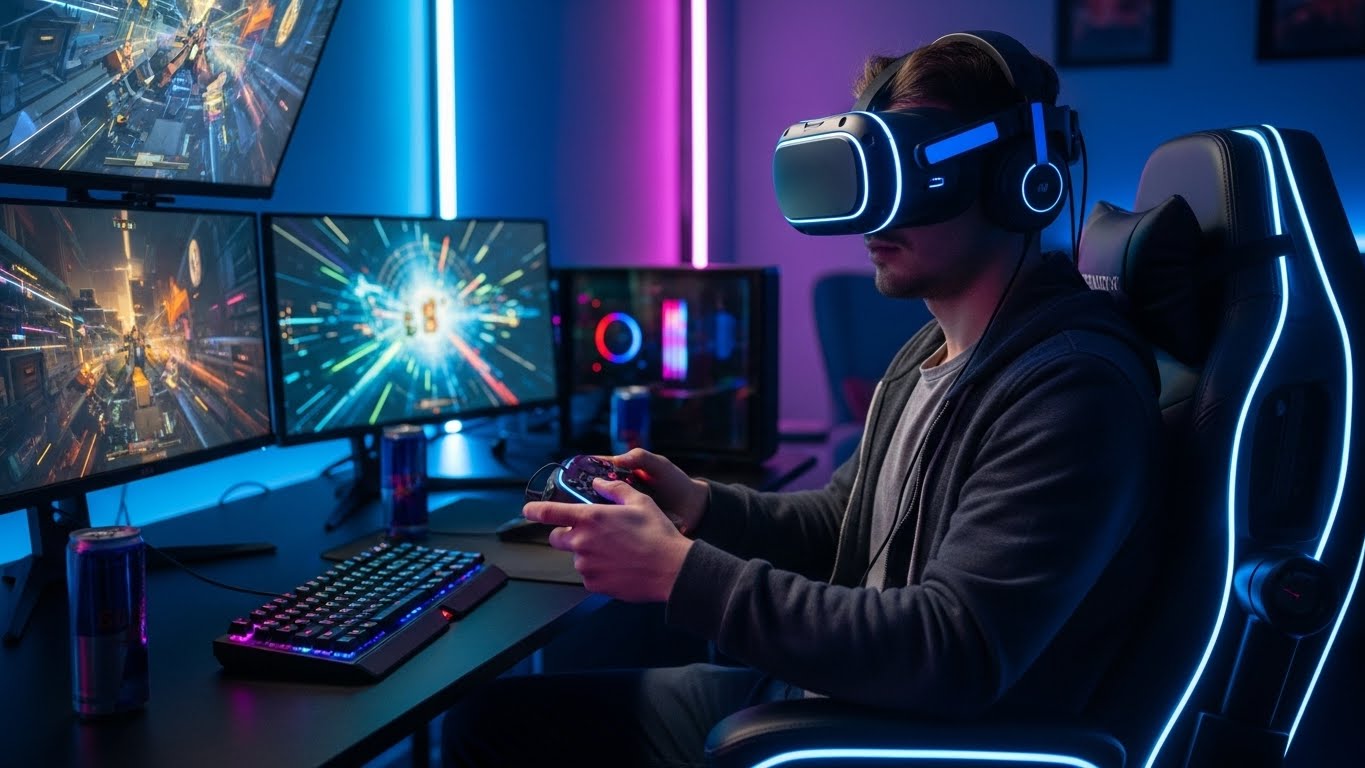
Moreover, the advent of virtual reality (VR) and augmented reality (AR) has introduced entirely new ways to interact with games. VR gaming, in particular, has made significant strides, with headsets like the Oculus Rift and PlayStation VR offering players the opportunity to step inside the game world and interact with it in a truly immersive way. The rise of AR games like Pokémon GO has also shown how digital and physical worlds can blend, creating unique experiences that were once the stuff of science fiction.
One of the most exciting developments in recent years is cloud gaming. Platforms like Google Stadia, Xbox Cloud Gaming, and Nvidia GeForce Now allow players to stream games directly from the cloud, eliminating the need for expensive hardware and reducing the barriers to entry for gamers. Cloud gaming allows players to access high-quality games on devices that would otherwise be incapable of running them, such as smartphones, tablets, and low-end PCs. As internet infrastructure improves, cloud gaming is expected to become even more popular, making it easier for players around the world to access the latest titles without needing a powerful gaming rig.
The Social Impact of Gaming: Building Communities and Friendships
One of the most profound ways that gaming has changed over the years is its social aspect. Gaming has evolved from a solitary activity to a communal one, where players interact with others in real time, collaborate on missions, and compete for high scores. Multiplayer games and online platforms have created virtual spaces where people from all walks of life can meet, form friendships, and even work together to achieve shared goals.
Games like Fortnite, Minecraft, and Among Us have fostered vibrant online communities, where players can connect and socialize, transcending traditional physical boundaries. These virtual worlds offer players a sense of belonging, and many gamers report forming meaningful relationships and friendships through gaming, some of which last for years.
Moreover, the rise of streaming platforms like Twitch and YouTube Gaming has allowed gamers to broadcast their gameplay and interact with audiences in real-time. Streamers have become celebrities in their own right, building massive followings and even monetizing their content through ads, sponsorships, and donations from fans. The accessibility of these platforms has made gaming a form of social media, where fans can directly interact with their favorite players, participate in live events, and share experiences with others.
Gaming communities also play a vital role in promoting diversity and inclusion. Online games bring together people from different cultures, races, and backgrounds, allowing them to collaborate and learn from one another. Many gaming companies and influencers are actively working to ensure that gaming spaces are welcoming and inclusive, creating an environment where everyone can feel safe and represented.
The Future of Gaming: Innovations on the Horizon
The future of gaming is incredibly exciting, as new technologies and concepts continue to reshape the landscape. The next few years will likely bring even more immersive experiences, from advancements in AI-driven gameplay to the continued development of VR and AR. The rise of the metaverse, a concept of interconnected virtual worlds where people can live, work, and play, may redefine how we think about digital spaces and social interactions.
Additionally, as gaming becomes more integrated into the mainstream, we can expect further innovations in game design, storytelling, and player engagement. Games will continue to become more interactive, allowing players to influence narratives and create unique experiences that reflect their choices and actions.
Conclusion: Gaming Is Here to Stay
From its humble beginnings as a niche pastime to its current status as a cultural and technological powerhouse, gaming has evolved into a multi-faceted and dynamic form of entertainment. It has revolutionized how we socialize, compete, and experience digital worlds. The gaming community is vast, diverse, and constantly growing, and the future promises even more exciting advancements in gameplay, technology, and interaction