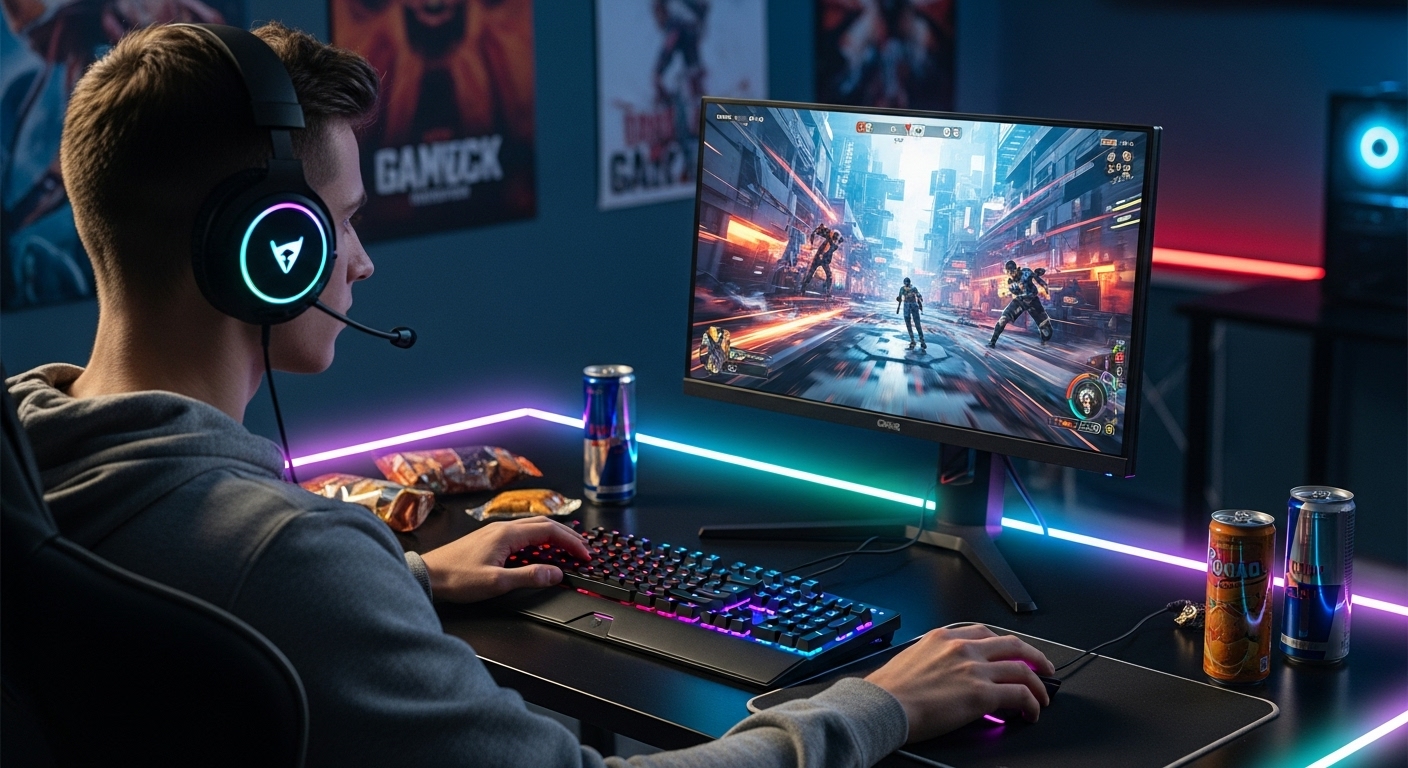
Gaming has come a long way since its humble beginnings, evolving from simple 8-bit games to vast, immersive digital universes. What started as an experimental form of entertainment has now become a multi-billion-dollar industry, shaping culture, technology, and society. In this blog, we’ll explore how gaming has transformed over the decades, highlighting key milestones, and what the future holds for this ever-evolving medium.
The Early Days: Arcade Games and the Birth of Home Consoles
In the 1970s and 1980s, the gaming world was primarily shaped by arcade machines. Games like Pong and Space Invaders captivated audiences with their simple yet addictive gameplay. These games were often basic, with pixelated graphics and limited sound, but they provided a thrilling, competitive experience that would lay the foundation for future gaming.
The real revolution came in the mid-1980s with the arrival of home gaming consoles. The Nintendo Entertainment System (NES) and the Sega Genesis made it possible for people to enjoy gaming from the comfort of their homes. The ability to play games like Super Mario Bros., The Legend of Zelda, and Sonic the Hedgehog on a home console marked a pivotal shift in how games were consumed. It also gave rise to the concept of video game franchises, something that would become integral to the gaming industry.
The 3D Revolution: Entering New Dimensions
As technology advanced, so did the games themselves. The 1990s brought about a new era in gaming with the introduction of 3D graphics. The Sony PlayStation, released in 1994, was a game-changer. Games like Final Fantasy VII and Gran Turismo took advantage of the new 3D capabilities, offering more detailed and immersive experiences. This shift in graphics wasn’t just about making games look better—it allowed for more complex gameplay and narrative depth.
At the same time, the advent of the internet and online multiplayer gaming added another layer of innovation. Titles like Quake and Unreal Tournament set the stage for the online gaming revolution. Gamers no longer needed to be in the same room to compete; they could now face off against players across the world, changing the dynamic of competitive gaming forever.
The Rise of Open-World Games and Expansive Universes
The 2000s and 2010s saw the rise of open-world games—titles that allow players to explore vast, interconnected worlds without being confined to a linear path. Games like Grand Theft Auto: San Andreas, The Elder Scrolls V: Skyrim, and The Witcher 3: Wild Hunt introduced sprawling environments filled with side quests, hidden secrets, and stories waiting to be uncovered.
The allure of these games lies in their freedom. Players can choose how to engage with the world, whether through combat, exploration, or simply enjoying the environment. These open-world games also feature dynamic systems where every action can have a lasting impact on the world around the player, creating a sense of agency and immersion.
The Rise of Multiplayer and Esports
Another key development in gaming has been the explosive growth of multiplayer gaming and esports. Games like League of Legends, Fortnite, and Overwatch have turned online multiplayer games into global phenomena, attracting millions of players and viewers. Esports tournaments, with prize pools often reaching into the millions, have turned competitive gaming into a legitimate career option for many players.
The rise of esports has also led to the creation of specialized streaming platforms like Twitch, where fans can watch professional players and content creators showcase their skills. Gaming has gone from a solitary activity to a global, interactive experience that connects people from all corners of the globe.
Virtual Reality and the Next Frontier
As gaming technology continues to evolve, one of the most exciting frontiers is virtual reality (VR). VR headsets like the Oculus Rift and PlayStation VR have taken immersion to a whole new level. Players can now step inside the games they play, moving their bodies and interacting with the virtual environment in ways that were once impossible.
While VR gaming is still in its infancy, the potential for more realistic and engaging experiences is vast. Games like Half-Life: Alyx have shown that VR can create a level of immersion that traditional gaming setups simply cannot match. As VR technology continues to improve, we may soon see entire worlds that we can interact with in ways we’ve only dreamed of.
The Future of Gaming: What Lies Ahead?
Looking ahead, the future of gaming seems more exciting than ever. With the development of next-gen consoles like the PlayStation 5 and Xbox Series X, the possibilities are expanding. Cloud gaming is also on the rise, allowing players to stream games without needing powerful hardware, making high-quality gaming more accessible than ever.
Furthermore, advancements in AI, machine learning, and procedural generation promise to make gaming worlds even more dynamic and responsive. Imagine a game that adapts to your playing style or a narrative that evolves based on your decisions, creating a truly personalized experience.
The growth of augmented reality (AR) and integration with real-world environments could also take gaming into the physical world. Games like Pokémon GO have already shown the potential of AR, and we can expect even more innovative uses of AR in the future.
Conclusion: Gaming as a Cultural Force
From its humble beginnings as an arcade pastime to its current status as a cultural powerhouse, gaming has undergone an incredible transformation. It has become an art form, a sport, and a community in its own right. With every new innovation, gaming continues to break barriers, challenge technology, and unite people in new ways.
As we look to the future, one thing is certain: gaming is here to stay, and its evolution is far from over. Whether you’re a casual gamer, a competitive esports player, or simply someone who enjoys escaping into virtual worlds, the next chapter of gaming is bound to be one for the history books.
This blog post dives into the history, milestones, and future of the gaming industry, capturing how far it has come and hinting at where it’s heading next. Let me know if you’d like to explore a particular aspect of gaming more in-depth!