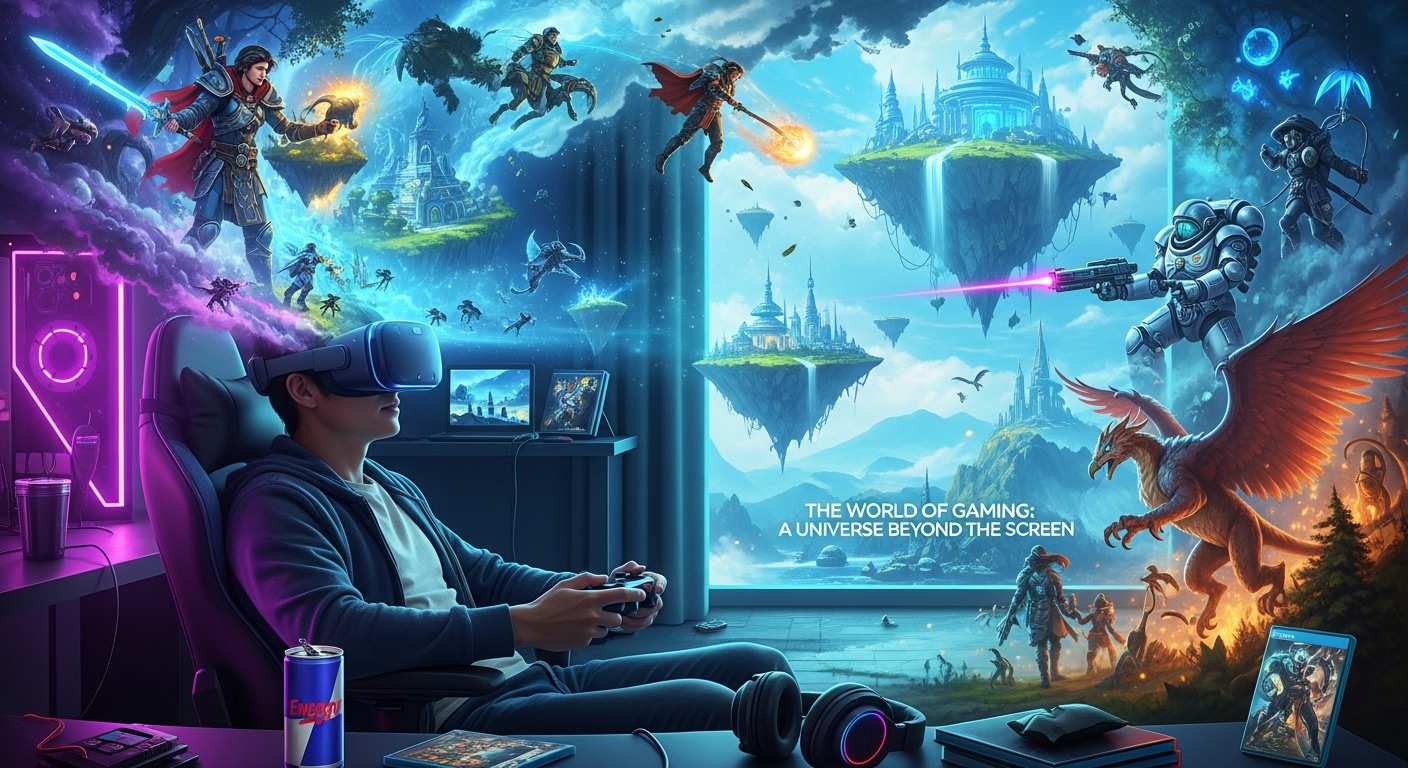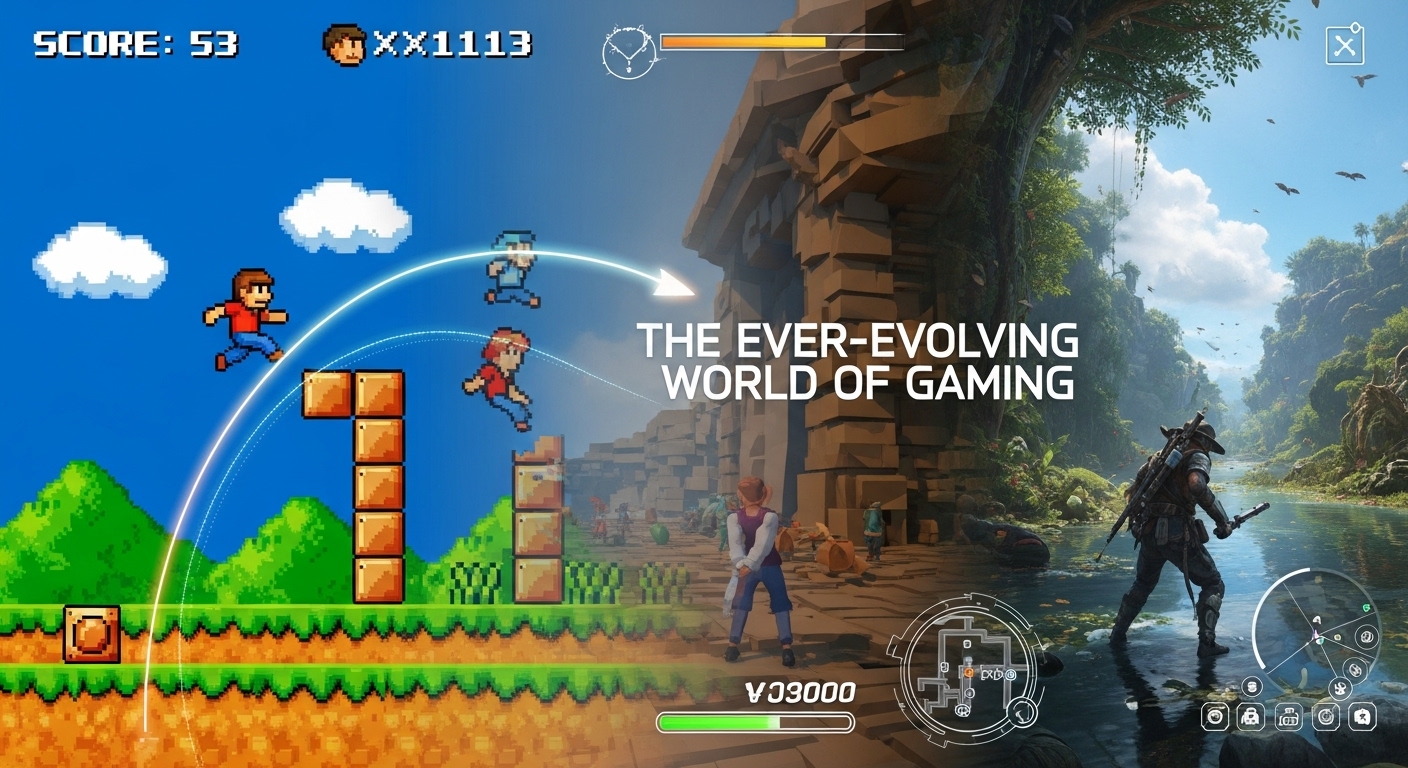
Gaming has evolved into one of the most dynamic and influential forms of entertainment in the modern world. Over the years, the medium has transformed from simple pixelated screens and rudimentary gameplay to incredibly immersive experiences that engage players on an emotional, intellectual, and even physical level. The appeal of gaming goes beyond just the mechanics of play—what truly makes a game stand out is its ability to offer something unique. Games with distinctive features, whether through innovative gameplay, storytelling, or design, have the power to captivate and inspire. In this blog post, we explore how unique titles in the gaming world have shaped the industry and why these games continue to capture the hearts of millions.
The Essence of Unique Gaming Experiences
At its core, a unique gaming experience isn’t just about novelty—it’s about pushing boundaries. It’s about creating something that surprises players and challenges their expectations. While most games follow established formulas, the truly exceptional ones stand out by doing something different. Whether it’s through unexpected mechanics, unconventional storytelling, or stunning visual design, these games provide players with experiences that leave a lasting impression.
A unique game isn’t just memorable for its creativity; it also has the power to redefine how we think about gaming. It might offer a new perspective on an old genre, introduce an entirely new genre, or even inspire entire new trends within the gaming community. By breaking the mold, these games contribute to the ever-evolving landscape of the gaming world, making it more diverse, inclusive, and innovative.
The Evolution of Video Games: From Basic to Brilliant
In the early days of video gaming, titles were simple and focused primarily on gameplay mechanics. Games like Pong and Space Invaders were groundbreaking for their time, but they were limited by technology and design constraints. As the gaming industry progressed, so did the complexity of games. However, it wasn’t until the late 80s and early 90s that developers began to explore new possibilities, with the rise of iconic games like The Legend of Zelda and Super Mario Bros. These games introduced more elaborate worlds, engaging narratives, and deeper gameplay systems.
As the gaming industry grew, so did its potential for innovation. In the 2000s, games began to focus more on story-driven experiences, creating worlds that players could fully immerse themselves in. The introduction of new gaming technologies, such as 3D graphics and online multiplayer, added layers of depth to the gaming experience. Still, it was the unique titles—the ones that dared to explore uncharted territories—that stood out in a crowded market. These games didn’t just follow trends; they created them.
Journey: A Minimalist Masterpiece
Released in 2012 by Thatgamecompany, Journey is a perfect example of how simplicity can create a powerful, emotionally resonant experience. Unlike most games, Journey focuses on exploration and emotional connection rather than combat or complex mechanics. Players control a robed figure traveling through a vast desert toward a distant mountain. The game’s narrative is subtle, conveyed primarily through visual cues, music, and the player’s environment.
What makes Journey unique is its ability to evoke emotion without a single spoken word. The game’s minimalist design, coupled with an incredible soundtrack composed by Austin Wintory, creates an atmosphere that draws players into its world. The beauty of Journey lies in its restraint—players are given the freedom to interpret the story in their own way. Additionally, the game’s multiplayer aspect is subtle but powerful. You can encounter other players during your journey, but you never know who they are or can communicate with them directly. The shared experience of exploring this world with a stranger creates an unspoken bond that elevates the emotional impact of the game.
By defying traditional narrative structures and focusing on a purely experiential journey, Journey demonstrated how video games can be a medium for profound emotional storytelling.
Shadow of the Colossus: A Battle of Ethics and Scale
Another groundbreaking game that stands out for its unique design is Shadow of the Colossus, released in 2005 by Team Ico. Set in a vast, barren world, Shadow of the Colossus centers around a young man named Wander, who must defeat 16 massive colossi to restore the life of a loved one. The game’s central mechanic involves scaling and battling these towering creatures, each battle acting as a puzzle that requires the player to figure out how to reach weak points on each colossus.
What makes Shadow of the Colossus unique is its scale. The colossi are enormous, and the process of climbing them is both thrilling and daunting. The game’s minimalist world design adds to the sense of isolation, with little in the way of other enemies or distractions. Each colossus fight is a test of patience and strategy, as players must carefully navigate the creature’s body to find a way to bring it down.
Beyond the gameplay mechanics, Shadow of the Colossus is a deeply philosophical game. The narrative questions the morality of Wander’s actions, as the colossi, though ancient and powerful, are not inherently evil. By the end of the game, players are left to grapple with the consequences of their actions, making it a thought-provoking experience that is unlike anything else in the action-adventure genre.
The Legend of Zelda: Breath of the Wild: Freedom Redefined
When The Legend of Zelda: Breath of the Wild was released in 2017, it shattered expectations and revolutionized the open-world genre. Unlike previous Zelda games, which had a more structured approach to exploration, Breath of the Wild gave players the freedom to explore the expansive world of Hyrule at their own pace. The game’s open-ended design allows players to tackle challenges in any order, making each playthrough feel unique.
What truly sets Breath of the Wild apart is the way it encourages experimentation. The game’s physics engine allows players to interact with the world in creative ways—whether it’s using the environment to solve puzzles or experimenting with different methods to defeat enemies. The freedom to approach problems in multiple ways makes the game feel dynamic and alive.
Additionally, the game’s minimalist storytelling allows players to uncover the narrative at their own pace, adding to the sense of discovery. Breath of the Wild redefined what an open-world game could be, prioritizing player agency and immersion above all else. It is a testament to the power of unique game design in shaping the future of gaming.
Braid: Time-Bending Puzzle Platformer
Another game that stands out for its innovative mechanics is Braid, a 2008 puzzle platformer created by Jonathan Blow. At its core, Braid is a traditional platformer, where players navigate through various levels while solving puzzles and avoiding enemies. However, what makes Braid unique is its time manipulation mechanic. Players can rewind time, slow it down, and even manipulate its flow to solve increasingly complex puzzles.
The time-based mechanics are not just a gimmick; they are integral to the game’s narrative. The puzzles evolve alongside the story, and the game’s mechanics help convey deeper themes of regret, the passage of time, and the consequences of one’s actions. The game’s art style is also distinctive, featuring hand-painted backgrounds and a dreamlike atmosphere that complements its philosophical tone.
Braid is a prime example of how gameplay and narrative can work in tandem to create a thought-provoking experience. It challenges players not only to think critically about how they solve puzzles but also about the deeper themes the game explores. It is a shining example of how video games can be used to explore complex emotional and intellectual concepts.
Papers, Please: A Game of Morality and Bureaucracy
Papers, Please, released in 2013 by Lucas Pope, is one of the most unique games to come from the indie scene. In this game, players take on the role of an immigration officer at a border checkpoint in a fictional dystopian country. The player’s task is to inspect documents, passports, and entry papers to decide who can pass through and who must be denied entry.
What makes Papers, Please unique is the moral complexity of the decisions players must make. The game places players in situations where they must balance duty, compassion, and self-preservation. Players are forced to make tough choices—should they follow the rules strictly, or should they bend them to help those in need? These decisions have consequences, affecting not only the player’s character but also the world around them.
The game’s pixelated art style and bleak, oppressive atmosphere add to the sense of moral ambiguity and the weight of the decisions the player must make. By focusing on bureaucracy and the personal toll of following orders, Papers, Please challenges players to think about the impact of their actions and the nature of authority, making it a unique and deeply engaging experience.
The Future of Unique Games
As technology advances and the gaming industry continues to grow, the potential for unique gaming experiences is greater than ever. With the advent of virtual reality, cloud gaming, and other innovations, developers have more tools at their disposal to create worlds and mechanics that push the boundaries of what is possible.
Unique games have always been a driving force in the gaming industry, and they will continue to be. They inspire new ways of thinking, encourage creativity, and challenge players to see the world of gaming from different perspectives. As long as developers continue to take risks and push the envelope, we can expect to see even more groundbreaking titles that redefine the gaming experience for years to come.
In conclusion, the world of gaming is vast and full of potential. Unique games, whether through their innovative mechanics, emotional storytelling, or unconventional design, have the power to captivate and inspire players. These games remind us that, in the world of gaming, anything is possible.