Introduction: The Rise of a Global Phenomenon
Gaming is no longer just a pastime; it has become a cultural movement, a technological marvel, and for many, a lifestyle. What started as a few blinking pixels on a screen has evolved into vast virtual universes capable of simulating life itself. Over the last five decades, gaming has transformed from niche entertainment into a global industry worth hundreds of billions, influencing how people learn, connect, and create. Whether it’s the thrill of competition, the beauty of storytelling, or the sense of community it offers, gaming touches every aspect of modern life.
The Dawn of Gaming: When the Digital Era Began
The roots of gaming can be traced back to the 1950s and 1960s, when scientists and engineers began experimenting with computer systems. Simple programs like Tennis for Two and Spacewar! laid the foundation for what was to come. The 1970s brought the arcade revolution, with games like Pong capturing the imagination of millions. The joy of hitting a digital ball back and forth may seem trivial now, but it was a technological miracle back then.
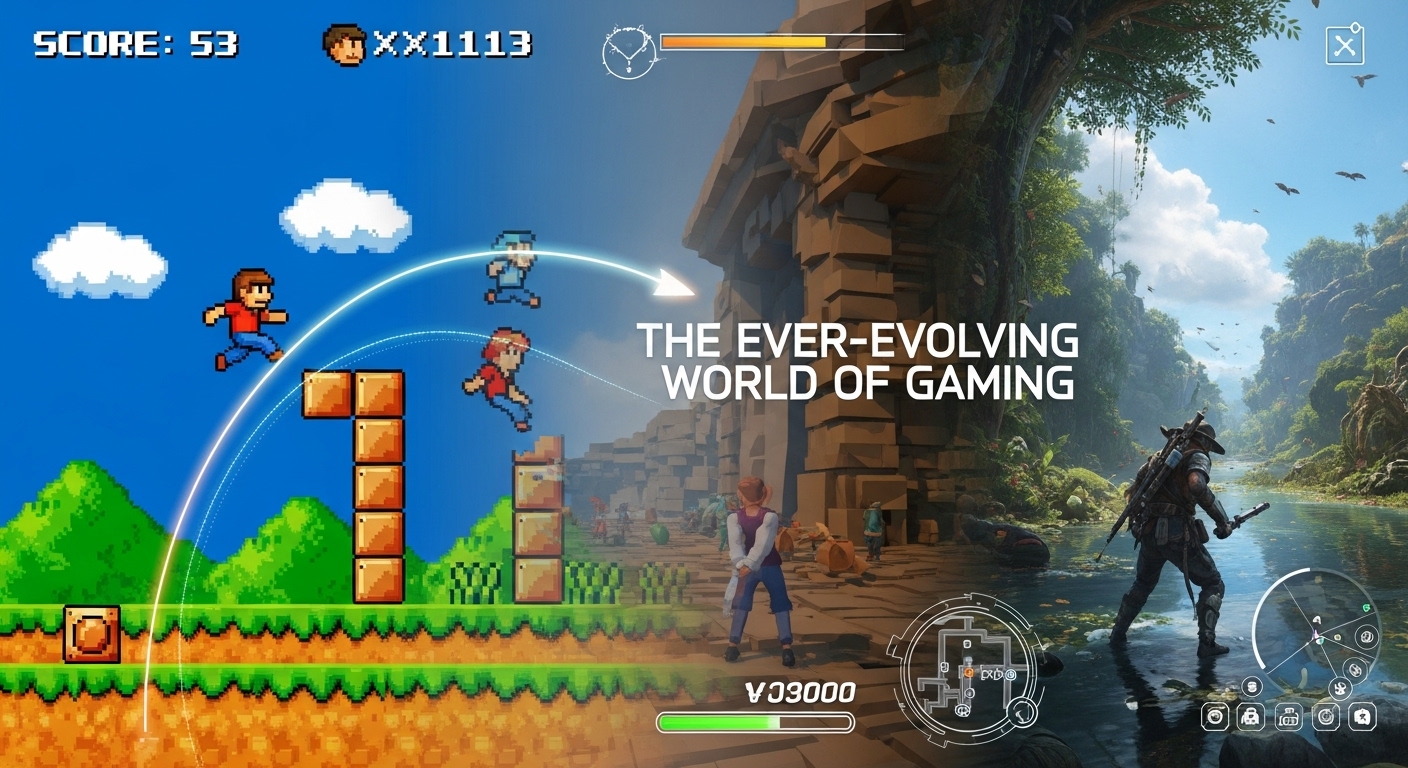
Home consoles soon followed, allowing families to bring the arcade experience into their living rooms. The 8-bit era of the 1980s, dominated by systems like the Atari 2600 and the Nintendo Entertainment System, became the true beginning of gaming culture. Characters like Mario, Link, and Pac-Man emerged as icons, and their adventures became a part of childhood for an entire generation.
The Golden Age: From 2D to 3D Realities
The 1990s marked a revolution in graphics and gameplay. The leap from 2D sprites to 3D environments changed everything. Games like Super Mario 64, The Legend of Zelda: Ocarina of Time, and Final Fantasy VII introduced cinematic storytelling and immersive worlds. Consoles like the Sony PlayStation, Sega Saturn, and Nintendo 64 pushed the boundaries of what was possible.
This decade also saw the rise of competitive gaming, with players gathering in arcades and LAN parties to prove their skills. Street Fighter II and Quake tournaments became early examples of what would later become esports. The sense of community and rivalry that began here still fuels competitive gaming today.
The Internet Revolution: Connecting Players Worldwide
The late 1990s and early 2000s introduced a new era — online gaming. The internet changed how games were played, shared, and experienced. Titles like Counter-Strike, Diablo II, and EverQuest connected millions of players across the globe, allowing them to cooperate or compete without ever meeting in person. Multiplayer gaming transformed from local split-screen fun to global digital arenas.
The rise of broadband internet further accelerated this shift. Massively Multiplayer Online Role-Playing Games (MMORPGs) like World of Warcraft became cultural phenomena. Gamers spent hours building characters, forming guilds, and living entire alternate lives within these worlds. For many, the friendships and achievements they made online felt as real as anything in the physical world.
The Evolution of Consoles and PCs
Gaming hardware has evolved dramatically. From bulky cartridges to high-speed SSDs, from wired controllers to motion sensors, the journey has been nothing short of astonishing. The PlayStation 2 became one of the best-selling consoles of all time, delivering cinematic experiences with its DVD format. Microsoft entered the arena with the Xbox, introducing powerful hardware and the iconic Xbox Live service, which revolutionized online console gaming.
Meanwhile, PC gaming continued to thrive with its customizable performance and expansive library. Graphics cards became more powerful, enabling games with breathtaking detail and realism. Titles like Half-Life 2 and Crysis showcased what cutting-edge technology could achieve. The PC also became the birthplace of indie development, allowing smaller studios and individual creators to innovate without massive budgets.
The Mobile Gaming Boom
The 2010s saw another seismic shift: mobile gaming. Smartphones brought gaming to billions of people who never owned a console or gaming PC. Simple yet addictive titles like Angry Birds, Candy Crush Saga, and Clash of Clans redefined accessibility. Suddenly, gaming wasn’t something confined to living rooms or gaming rigs—it was everywhere, in everyone’s pocket.
Mobile games expanded the demographic of players, including children, parents, and even grandparents. It blurred the line between casual and hardcore gaming. The ease of use, coupled with free-to-play models and microtransactions, created an entirely new business model that reshaped the industry.
The Cultural Impact of Gaming
Gaming has become a language of culture. Characters like Master Chief, Kratos, and Lara Croft are as recognizable as movie stars. Esports athletes have fan bases rivaling traditional sports icons. Gaming soundtracks are performed in orchestras, and game-inspired fashion lines and art exhibitions are now commonplace.
Storytelling in games has matured as well. Titles like The Last of Us, Red Dead Redemption 2, and God of War have demonstrated that video games can deliver emotional depth and narrative sophistication on par with the best films or novels. The player isn’t just a spectator—they are part of the story. This interactivity is what sets gaming apart from any other medium.
Esports: The New Digital Stadiums
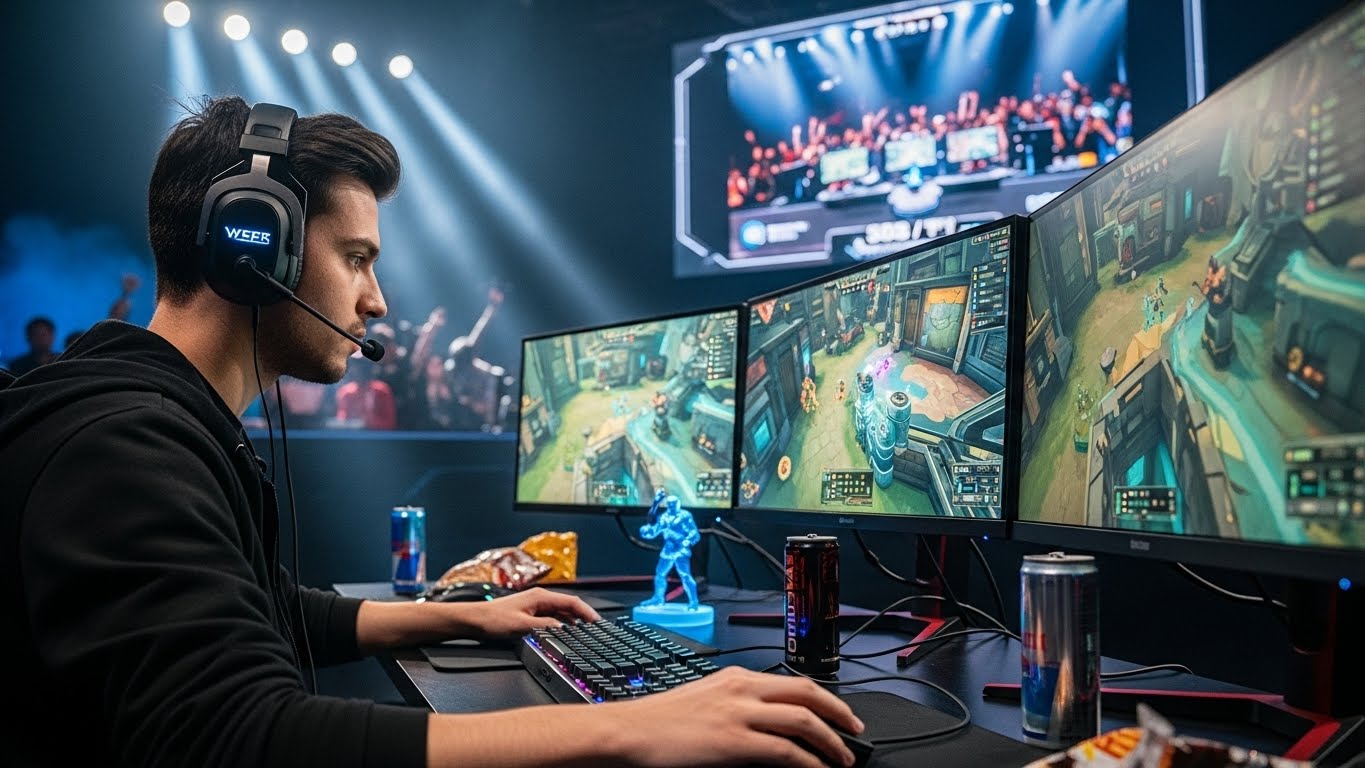
What once started as small community tournaments has evolved into a global competitive ecosystem. Esports now fills stadiums, attracts sponsorships from major brands, and offers multi-million-dollar prize pools. Games like League of Legends, Dota 2, Fortnite, and Counter-Strike 2 have become cornerstones of this phenomenon.
Professional gamers train for hours, mastering reflexes, strategy, and teamwork. Their dedication mirrors that of traditional athletes. Streaming platforms have further amplified this culture, allowing fans to watch, learn, and engage with their favorite players in real time. Esports has also brought legitimacy to gaming as a career, opening paths in coaching, broadcasting, management, and content creation.
The Psychology of Gaming: Why We Play
Gaming is more than entertainment; it’s a psychological experience. Players are drawn to games for different reasons—achievement, exploration, creativity, or social interaction. Some seek competition, while others enjoy the escapism and freedom games offer.
Research has shown that gaming can enhance problem-solving, hand-eye coordination, and cognitive flexibility. It provides a sense of progression and reward, satisfying fundamental human needs for competence and autonomy. Multiplayer games fulfill the social aspect, connecting people across borders and backgrounds.
However, like any form of entertainment, moderation is key. Excessive gaming can lead to issues like addiction or neglect of responsibilities. The industry has begun addressing these challenges with parental controls, playtime reminders, and healthier design practices.
The Rise of Virtual and Augmented Reality
Virtual Reality (VR) and Augmented Reality (AR) are pushing gaming into new dimensions. VR headsets immerse players in 360-degree worlds, making them feel as if they’ve truly stepped inside the game. Experiences like Half-Life: Alyx and Beat Saber have demonstrated the unique power of VR to engage both body and mind.
Augmented Reality, on the other hand, blends the digital with the physical. Pokémon GO was a groundbreaking example, turning the real world into a playground filled with virtual creatures. These technologies are still evolving, but they represent the next major frontier in gaming’s evolution.
Indie Games: The Heart of Creativity
While big-budget games dominate headlines, the indie gaming scene has become the soul of innovation. Independent developers, often working with small teams and limited resources, create experiences driven by passion and creativity rather than profit. Games like Undertale, Celeste, and Hollow Knight have shown that heartfelt stories and inventive gameplay can capture millions of players without the need for massive marketing budgets.
Indie games often experiment with new ideas, pushing artistic and emotional boundaries. They remind us that gaming is not only about graphics and technology but about expression, imagination, and connection.
The Role of Storytelling in Modern Games
Storytelling in gaming has evolved into a sophisticated art form. Where once stories were simple backdrops for gameplay, they are now central to the experience. Narrative-driven games allow players to make choices that shape outcomes, giving them a sense of authorship over the story. This interactivity creates a deep emotional investment rarely found in other mediums.
Games like Detroit: Become Human or Life is Strange showcase branching narratives where every decision matters. The moral dilemmas, complex characters, and immersive worlds blur the line between player and storyteller. This evolution has cemented gaming as a legitimate narrative platform, capable of delivering experiences that challenge, move, and inspire.
The Sound and Art of Immersion
Beyond gameplay and story, music and art design are vital in crafting immersive experiences. A powerful soundtrack can elevate a game from good to unforgettable. The haunting melodies of The Elder Scrolls, the epic orchestras of Final Fantasy, and the ambient tones of Journey all evoke emotion and atmosphere that resonate long after the game ends.
Art direction, too, defines identity. Whether it’s the pixelated charm of retro games or the photorealistic worlds of modern titles, visual style communicates tone and emotion. Some games adopt minimalist designs, while others push graphical realism to its limits. Together, sound and art transform games into complete sensory experiences.
The Social Aspect: Communities and Connection
One of gaming’s most profound impacts is its ability to connect people. Online communities have become digital neighborhoods where players share experiences, form friendships, and support each other. Platforms like Discord, Reddit, and in-game chat systems have fostered global communities that transcend language and geography.
Gaming can also be a tool for social good. Charity livestreams, in-game fundraising events, and awareness campaigns show how gaming can unite people for causes beyond entertainment. For many, these communities offer belonging, identity, and emotional support.
The Economics of Gaming: From Cartridges to Cloud
The business model of gaming has evolved dramatically. Once, players simply bought a cartridge or disc and owned a game outright. Today, subscription models, downloadable content (DLC), and microtransactions dominate the landscape. While these systems have sparked debate, they’ve also allowed games to evolve post-launch, receiving updates, expansions, and live events that keep players engaged for years.
Cloud gaming represents the next big shift, removing the need for powerful hardware. With just a stable internet connection, players can stream high-quality games on any device. This could make gaming more accessible than ever before, erasing the boundaries between platforms.
Challenges and Controversies
The gaming world is not without challenges. Issues such as toxicity in online spaces, exploitative monetization practices, and lack of diversity in representation continue to spark debate. The industry has made progress in addressing these concerns, but there’s still work to be done to make gaming a truly inclusive and positive space.
Moreover, the question of game preservation has become crucial. As digital platforms dominate, older games risk disappearing forever. Ensuring that future generations can experience the history of gaming is as important as pushing the technology forward.
The Future of Gaming: Beyond Imagination
What lies ahead for gaming is both thrilling and unpredictable. Artificial intelligence is beginning to play a significant role in creating more dynamic, responsive worlds. Procedural generation and machine learning could allow games to adapt uniquely to each player’s style and emotion. Virtual worlds may become indistinguishable from reality, with fully immersive sensory feedback.
The convergence of gaming with other fields—education, fitness, social interaction, and work—suggests a future where gaming is woven into everyday life. Imagine learning history by exploring ancient cities in virtual reality or attending a concert inside a shared digital world with millions of others. These scenarios are no longer fantasy—they are the next steps in gaming’s evolution.
Conclusion: More Than Just a Game
Gaming has traveled a long road from its humble beginnings. It has grown into one of the most influential cultural forces of the modern era, shaping technology, art, and human connection. What makes gaming special is not just the entertainment it provides, but the creativity, emotion, and community it fosters.
Whether you are a casual player passing time on your phone, a dedicated esports athlete, or a storyteller crafting virtual adventures, gaming offers something uniquely human—a space to dream, to connect, and to play. The world of gaming is not just about winning or losing. It’s about experiencing the boundless creativity of the human spirit, pixel by pixel, world by world.