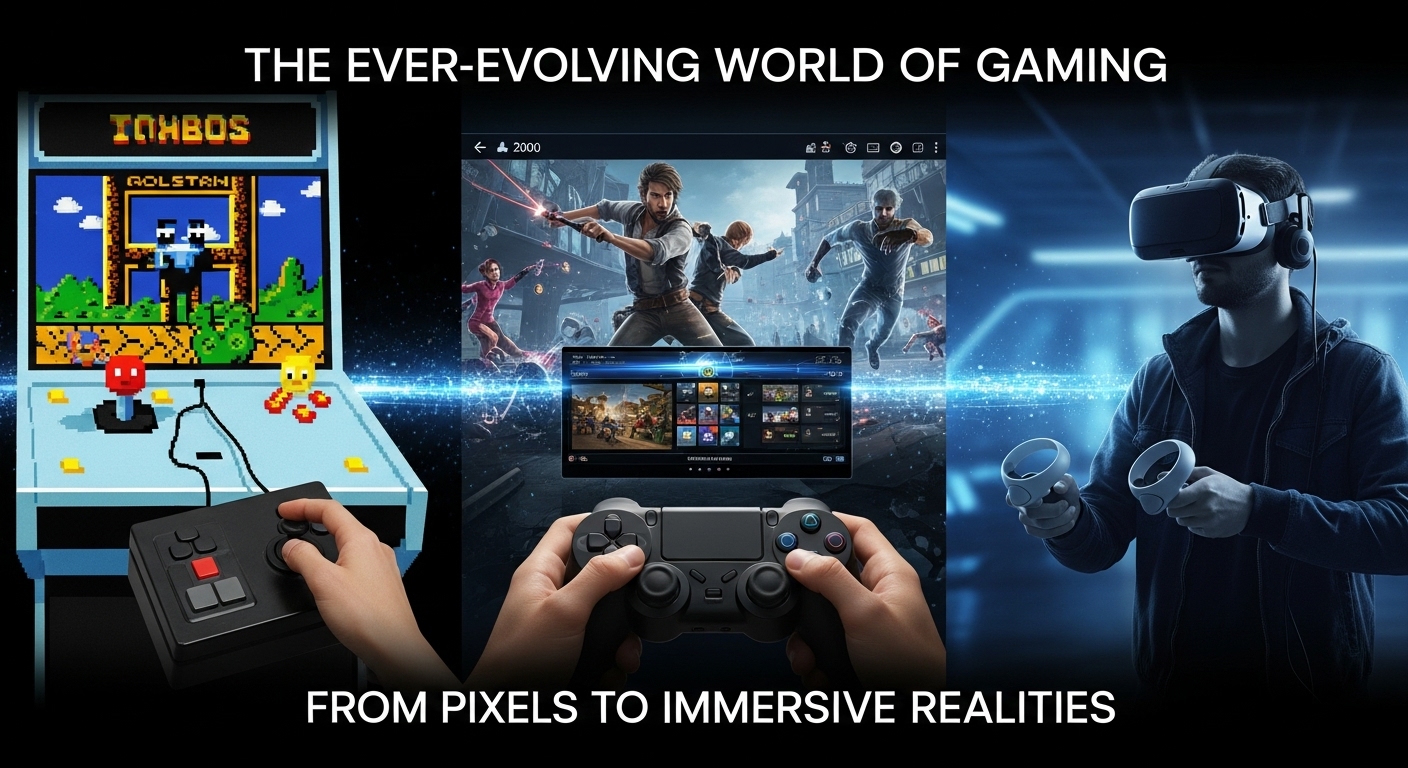
Gaming has grown from a niche hobby into a global cultural phenomenon. What once began as simple pixelated graphics and basic mechanics has transformed into complex virtual worlds, competitive eSports, and immersive experiences that rival Hollywood films in storytelling and visual design. The gaming industry has not only redefined entertainment but also impacted social interactions, technological development, and even education. In this blog, we will explore the evolution, impact, and culture surrounding gaming today.
The Early Days of Gaming
The roots of gaming trace back to the 1970s and 1980s, with the rise of arcade machines and early consoles like the Atari 2600 and the Nintendo Entertainment System. These platforms introduced players to classic titles that are still revered today, such as Pac-Man, Space Invaders, and Super Mario Bros. The simplicity of early games was part of their charm. Players were captivated by the challenge, high scores, and social aspects of gaming in arcades.
During this era, gaming was largely a solitary or small-group activity. Families would gather around a console, and friends would meet in arcades to test their skills. Despite limited graphics and rudimentary sound, these games laid the foundation for interactive storytelling and mechanics that continue to influence modern games.
The Rise of Home Consoles
The 1990s marked a significant shift in gaming culture as consoles became more powerful and accessible. The Sega Genesis, Super Nintendo Entertainment System (SNES), and later the Sony PlayStation brought console gaming into living rooms worldwide. This period saw the rise of franchise games such as Sonic the Hedgehog, The Legend of Zelda, and Final Fantasy.
Home consoles allowed for more immersive gameplay experiences. Players could spend hours exploring expansive worlds, solving complex puzzles, and engaging in narrative-driven adventures. The introduction of 16-bit graphics and improved sound design elevated gaming from simple entertainment to a medium capable of emotional engagement.
PC Gaming and Technological Advancements
While consoles dominated households, PC gaming carved its own niche. The flexibility of PCs allowed developers to experiment with genres such as strategy, simulation, and role-playing games. Titles like Civilization, The Sims, and Warcraft showcased the potential of gaming as both a creative outlet and a platform for complex strategy.
PC gaming also pushed the boundaries of graphics, processing power, and customization. Gamers could upgrade hardware to enhance performance, and modding communities emerged, allowing players to modify games and extend their lifespan. This culture of innovation fostered a unique relationship between developers and players, paving the way for interactive storytelling and community-driven content creation.
The Birth of Online Gaming
The advent of the internet in the late 1990s and early 2000s transformed gaming dramatically. Online multiplayer games became possible, enabling players to connect globally. Titles like Counter-Strike, World of Warcraft, and Halo popularized online gaming, creating communities that transcended geographical boundaries.
Online gaming brought new challenges and opportunities. It introduced competitive play, cooperative missions, and social interactions that were previously impossible. Players could join clans, guilds, and competitive leagues, turning gaming into a social experience as much as a hobby. The emergence of online gaming also set the stage for modern eSports, which would eventually become a billion-dollar industry.
The Evolution of Mobile Gaming
The rise of smartphones brought gaming to a wider audience than ever before. Mobile games such as Angry Birds, Candy Crush, and Pokémon Go introduced casual gaming to millions of players who may never have owned a console or high-end PC.
Mobile gaming democratized access to interactive entertainment. Anyone with a smartphone could engage in games that were quick, intuitive, and socially integrated. Features like in-app purchases, leaderboards, and social sharing became standard, creating a new economic model and a thriving mobile gaming market. Today, mobile gaming is a dominant force in the industry, rivaling traditional console and PC gaming in revenue and player engagement.
The Impact of eSports
eSports has transformed competitive gaming into a legitimate professional career. Games like League of Legends, Dota 2, Fortnite, and Call of Duty host tournaments with multi-million-dollar prize pools. Professional players have sponsorships, fan followings, and careers comparable to traditional athletes.
The rise of eSports has also influenced mainstream culture. Universities now offer scholarships for eSports players, major brands sponsor tournaments, and streaming platforms allow fans to watch competitions live. eSports has created a new ecosystem where gaming is both entertainment and professional achievement, bridging the gap between hobbyists and professionals.
Streaming and the Rise of Content Creators
Streaming platforms have transformed how gamers interact with their audience. Services like Twitch and YouTube Gaming allow players to broadcast gameplay, share tips, and entertain viewers in real time. Popular streamers have become cultural icons, influencing game trends, community behavior, and even game development decisions.
Streaming has also created a sense of inclusivity within gaming communities. Viewers can interact with streamers, ask questions, and become part of a virtual social environment. This shift has blurred the lines between playing games for personal enjoyment and participating in shared entertainment experiences, making gaming more social and interactive than ever.
Narrative and Storytelling in Modern Games
Modern gaming has evolved into a storytelling medium capable of conveying complex narratives, emotional depth, and philosophical themes. Titles like The Last of Us, Red Dead Redemption, and God of War demonstrate that games can rival films in character development and plot complexity.
Interactive storytelling allows players to make choices that influence outcomes, creating a sense of agency that traditional media cannot replicate. This interactivity enhances immersion, making players emotionally invested in characters and worlds. As technology continues to advance, the potential for more cinematic, emotionally resonant games grows exponentially.
Virtual Reality and Immersive Experiences
Virtual reality (VR) and augmented reality (AR) are pushing gaming into uncharted territory. Devices like the Oculus Rift, HTC Vive, and PlayStation VR provide fully immersive experiences, placing players directly inside virtual worlds. VR games such as Beat Saber, Half-Life: Alyx, and No Man’s Sky VR redefine interaction, movement, and immersion.
These technologies have applications beyond entertainment. VR is used for education, therapy, training, and social interactions, making gaming a tool for learning and personal development. Immersive experiences redefine the boundary between reality and virtual worlds, opening new possibilities for creativity and exploration.
Gaming as a Cultural Phenomenon
Gaming has transcended its role as mere entertainment. It influences fashion, music, film, and art. Cosplay, fan art, and game-inspired merchandise reflect how deeply gaming is embedded in contemporary culture. Major franchises inspire movies, novels, and collectibles, bridging the gap between different forms of media.
Moreover, gaming communities have created spaces for social interaction, activism, and self-expression. Gamers form friendships, collaborate creatively, and even participate in charitable events. The sense of belonging in gaming communities highlights its importance as a cultural and social force.
The Educational Potential of Gaming
Beyond entertainment, games have proven educational benefits. Strategy games enhance critical thinking, puzzle games improve problem-solving skills, and narrative-driven games encourage empathy and emotional intelligence. Educational institutions are increasingly integrating gamified learning into classrooms, using game mechanics to motivate and engage students.
Games also provide experiential learning opportunities. Historical simulations, scientific exploration games, and programming-based games allow players to learn actively, making education interactive and enjoyable. As the line between learning and gaming blurs, the potential for gamified education continues to expand.
Challenges in the Gaming World
Despite its growth, the gaming industry faces challenges. Issues such as addiction, toxic behavior in online communities, and monetization controversies pose ethical and social concerns. Microtransactions, loot boxes, and pay-to-win models have drawn criticism, raising questions about fairness and accessibility.
Additionally, representation and diversity in games remain critical issues. While strides have been made, the industry continues to grapple with inclusivity regarding gender, race, and cultural representation. Addressing these challenges is essential for ensuring that gaming remains a positive, welcoming, and sustainable medium.
The Future of Gaming
Looking ahead, the future of gaming is promising and dynamic. Advances in artificial intelligence, cloud gaming, and photorealistic graphics will continue to push the boundaries of what is possible. Games may become increasingly personalized, adaptive, and interactive, responding to individual players’ preferences and behaviors.
Cross-platform play, cloud-based streaming, and next-generation consoles will make gaming more accessible and interconnected. VR and AR will expand immersive experiences, while AI-driven narratives could create endlessly evolving storylines. The potential for games to serve as social, educational, and creative platforms is virtually limitless.
Conclusion
Gaming has evolved from simple arcade machines into a complex, multifaceted medium that impacts culture, technology, and society. It offers entertainment, education, social connection, and professional opportunities, making it a powerful cultural force.
As technology continues to advance, gaming will likely grow even more immersive, interactive, and influential. The communities, stories, and experiences built around gaming will continue to shape how we play, connect, and experience the digital world. Whether you are a casual player, a competitive gamer, or someone interested in the technological and cultural impact of gaming, there is no denying that gaming is a defining element of modern life.


